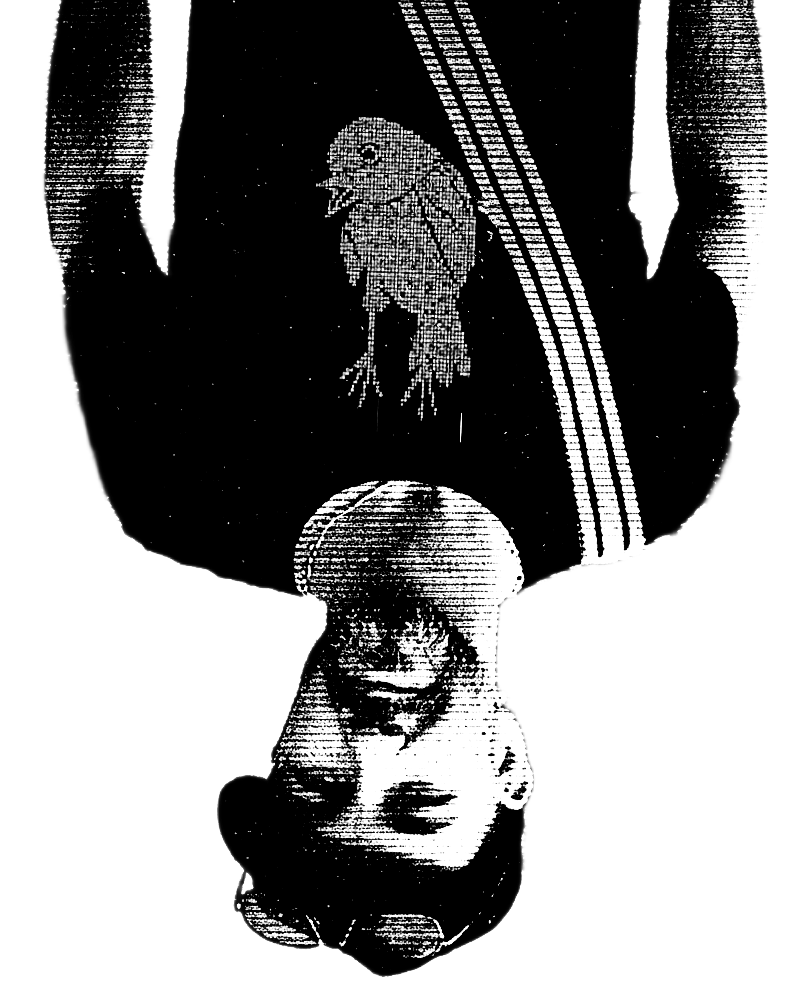
Dr. Brentley Frazer: The Nexus of Transgression, Academia, and Australian Literary Infrastructure
I. Positioning Frazer within the Contemporary Australian Literary Landscape
Dr. Brentley Frazer occupies a unique and significant position in contemporary Australian letters, defined by a complex synthesis of marginalized origins, institutional success, and rigorous adherence to transgressive aesthetics. His career trajectory exemplifies the intellectual integration of counter-cultural sensibilities into the highly formalized world of academic creative writing.
A. Biographical and Cultural Nexus: From Cult to Critique
Dr. Frazer was born in Townsville, Queensland, in 1972. His identity is rooted in diverse heritage, including Wiradjuri, Darug, Danish, Irish, and Scottish descent. This complex background informed a turbulent youth in outback Queensland, spent initially within the confines of a restrictive Protestant, Anti-Trinitarian cult known as “The Truth”.
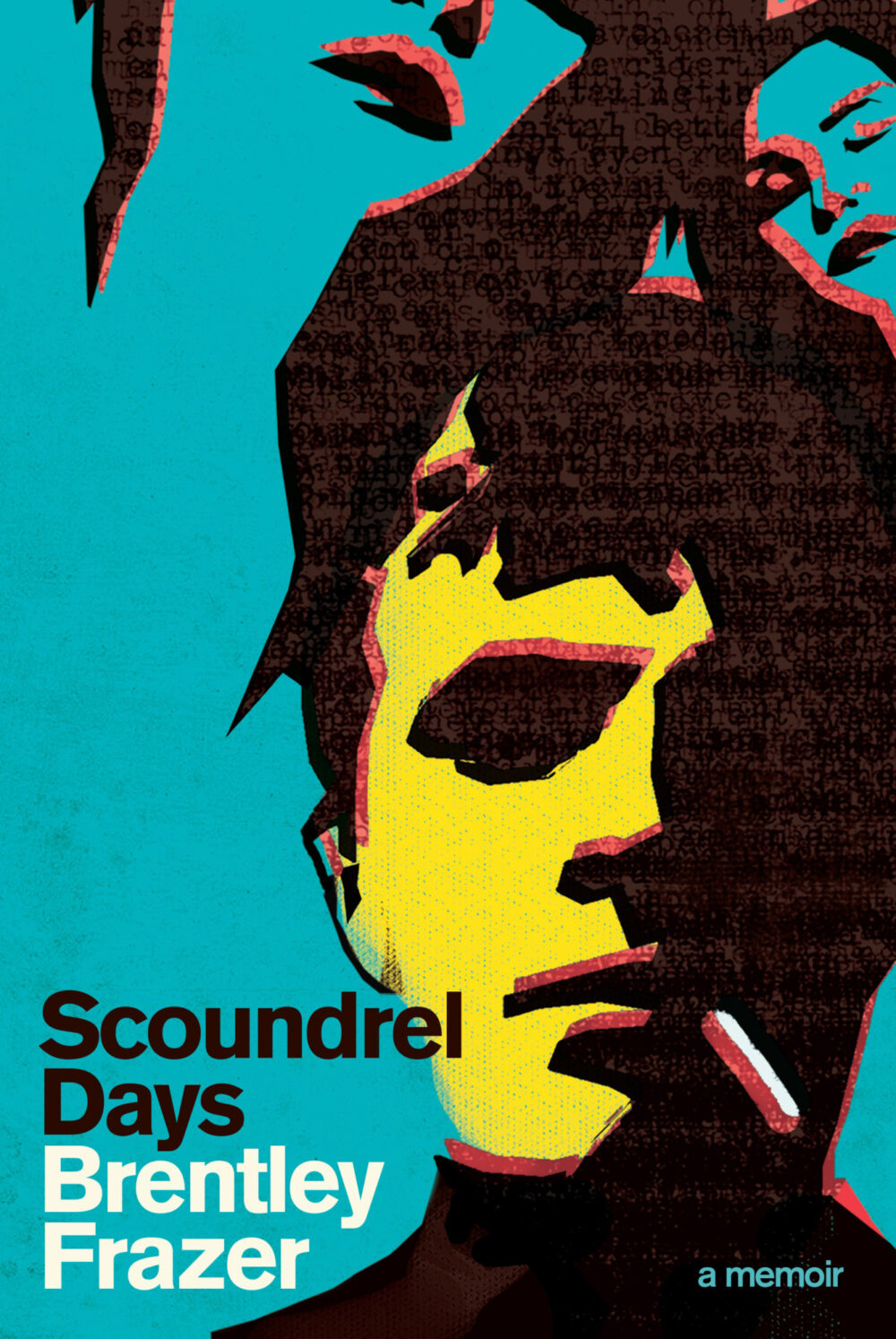
The formative experience of escaping this rigid environment through “literature and poetry, drugs and violence, sex and alcohol” provided the foundational thematic and ideological framework for his later creative output. The rejection of this restrictive religious childhood culminated in a sustained anti-authoritarian path, which became the raw, compelling material for his writing, notably his widely acclaimed memoir, Scoundrel Days. This intense personal rebellion against imposed moralizing and absolute structure appears to be intrinsically linked to his later linguistic methodology. The environment of a cult enforces an absolute, restrictive sense of reality—a belief in fixed states and definitions (“isness”). Frazer’s later adoption of the English Prime (E-Prime) constraint, which formally removes the verb “to be” from language, represents more than a stylistic choice; it functions as an essential, documented intellectual escape from dogmatic limitations. The memoir, therefore, serves not only as autobiography but as a detailed sociological record of rejecting structured dogma in favor of radical, chaotic experiential truth.
B. Academic Trajectory and Scholarly Synthesis
Frazer’s career is distinguished by his systematic institutionalization of his counter-cultural practice. He pursued extensive postgraduate studies, earning a Master of Arts in Writing from James Cook University in 2012. He subsequently earned a Doctor of Philosophy (PhD) in Creative Writing from Griffith University, awarded in December 2017. His doctoral supervision involved celebrated poet Anthony Lawrence and writer Nigel Krauth.
This academic trajectory is critical because it highlights the institutional acceptance and legitimization of previously subversive genres. The fact that Frazer’s highly transgressive creative non-fiction text, Scoundrel Days, served as the creative component of his doctoral thesis formally conferred scholarly legitimacy upon the Grunge Lit aesthetic within the Australian academy. By validating a text characterized by “wild excess” and “anti-authoritarian adventures” as high-level creative research, Frazer established a pathway for future Australian writers who draw on raw, gritty, lived experience to gain academic credentials. This achievement fundamentally broadened the definition of acceptable creative research and cemented his professional status, supplemented by his ongoing roles as a lecturer and academic tutor at Griffith University, teaching courses such as Reading Poetry.
C. Stylistic Domain: Dirty Realism, Grunge Lit, and Creative Non-Fiction
Frazer’s writing style is consistently categorized under specific, Gen X-associated aesthetic movements: Dirty Realism, Grunge Lit, Transgressive Fiction, and Creative Non-Fiction. These genres focus on depicting raw, unvarnished aspects of contemporary life, often concentrating on marginalized or lower-middle-class individuals and detailing the “sadness and loss” inherent in their everyday existence.
In the Australian context, Frazer is viewed as a key exponent of this literary tradition, with critics positioning him alongside prominent national figures such as Helen Garner, Andrew McGahan, and Nick Earls. His memoir has also garnered international comparisons to archetypal literary rebels like Holden Caulfield, the protagonist of On the Road, and a “Tom Sawyer on acid”. This confirmed affiliation solidifies his role as a chronicler of the Generation X experience, using a gritty, unromanticized lens to capture the reality of Australian urban and regional undercultures.
II. Analytical Deep Dive: The Creative Output
Frazer’s creative oeuvre demonstrates a consistent evolution from condensed, experimental verse to formally constrained, critically acclaimed prose, all rooted in the aesthetics of intensity and transgression.
A. The Early Poetry: Shaping the Transgressive Voice (1991–2003)
Frazer began his publishing career in poetry, establishing an early commitment to dark and intense subject matter. His early works include: Opera of Destruction (1991), Oneirodynia (1993), Blood Psalms (1995), and Fugue (1996). These titles themselves suggest a preoccupation with the chaotic and the visceral.
The collection A Dark Samadhi: poems + microtexts (2003) further demonstrated an early comfort with experimental form, specifically through the use of highly condensed poetic units. These foundational works established the poetic precision and focus on intense, psychological states that would later infuse his longer prose works, providing the technical basis for the critically lauded “lyrical cadence” of his writing.
B. Thematic Evolution in Poetry: Identity and Dispossession (2016–2020)
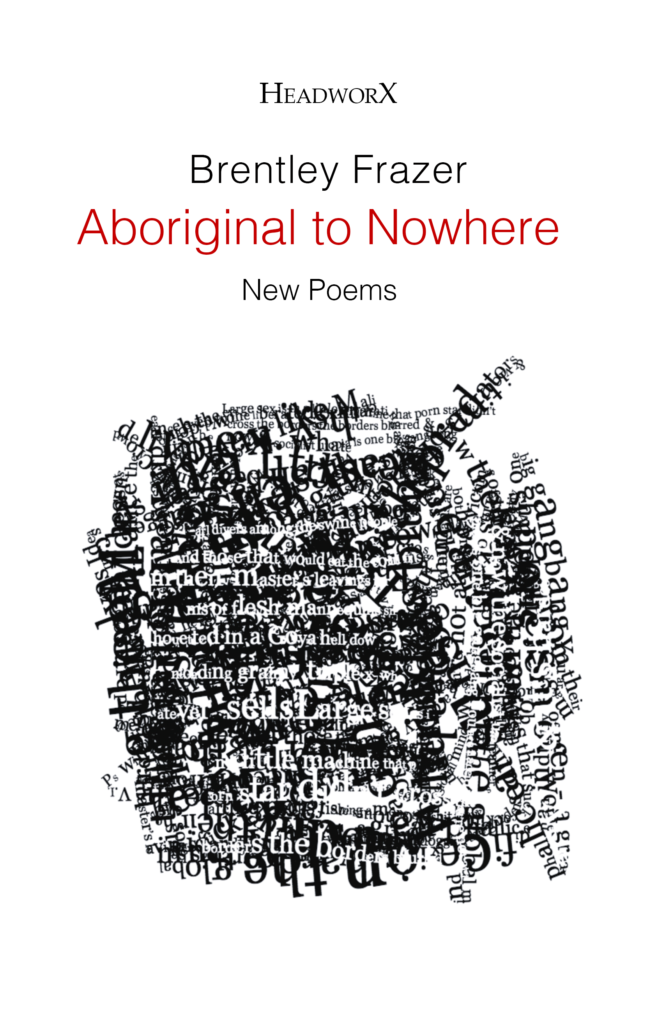
Frazer’s later poetic collections, particularly Aboriginal to Nowhere: new poems (2016) and Riding Sharks: new poems (2020) , mark a sophisticated engagement with modern Australian identity and cultural fragmentation. Aboriginal to Nowhere is structurally defined as a “Song Cycle of the Post Modern Dispossessed”. By employing the traditional ‘Song Cycle’ structure, Frazer consciously places his work within a prominent lineage of Australian verse, acknowledging influences such as Les Murray’s Buladelah-Taree Holiday Song Cycle and Ronald M. Berndt’s earlier translations.
However, Frazer directs this traditional form toward a critique of contemporary rootlessness. The poems populate a dynamic, noisy, yet spiritually empty world featuring a cross-section of society: “hipsters and junkies, the mentally ill, beer guzzlers, strippers, rednecks, millennials, academics, immigrants, city slickers and farmers”. Reviewers note that despite this crowded landscape, it is a world that is “ultimately nobody’s”. The work uses the Song Cycle—a historically connecting narrative form—to articulate a profound cultural fragmentation, suggesting that dispossession in modern Australia is a shared experience affecting all classes navigating disjointed, globalized spaces. Frazer is identified as a visionary figure whose “thoughtful and fierce collection” diagnoses a collective malaise, warning that humanity risks losing touch with its “core animality” and its connection to “real-world places”. The intensity and ferocity of the collection stem directly from this diagnosis of collective spiritual and geographical displacement.
C. The Memoir as Self-Conscious Performance: Scoundrel Days (2017)
Scoundrel Days: A Memoir is arguably Frazer’s most definitive work, charting his escape from a cult upbringing into an adolescence of extreme anti-authoritarianism. Published by the University of Queensland Press (UQP), the work is critically classified as a memoir, a Bildungsroman (coming-of-age story), a Künstlerroman (novel of the artist’s development), and Creative Non-Fiction.
The memoir’s structure is intrinsically tied to Frazer’s artistic self-awareness. He has indicated that the pursuit of chaotic experience was necessary for the artistic project, viewing his younger self as a “teenaged Valmont” whose excessive, boundary-pushing lifestyle provided the essential “lived experience to write the memoir”. This approach positions the text as a deliberate performance where extremity functions as a prerequisite for artistic maturity.
The critical success of Scoundrel Days rests on the synthesis of brutal content and refined form. Critics describe the text as a “visceral, compelling assault on the senses” and an “at times brutal story articulated with a poet’s sensibility”. The prose, though gritty, possesses a “lyrical cadence”. Nick Earls praised the writing, saying it was “Like poetry written with a nail gun”. This assessment confirms that the memoir functions as a redemptive narrative, not because the protagonist achieves moral correction, but because the adult author successfully imposes meticulous, poetic control and formal constraint upon the turbulent reality of his youth. The positive critical reception suggests that the violence and excess are elevated beyond simple shock value by the literary sophistication of the poet’s technique.
III. The Intersection of Praxis and Theory: Literary Innovation
A central aspect of Dr. Frazer’s influence is his role as a scholar and theorist who rigorously grounds his experimental creative output within academic discourse, most notably through his work on linguistic constraints.
A. Formal Research into Experimental Creative Non-Fiction
Frazer is a practitioner who maintains a strong scholarly identity, publishing academic papers alongside his poetry and prose. His doctoral research was defined specifically as “experimental creative non-fiction”. This academic output includes published papers such as Untitled Plane Crash and the conference paper Aboriginal to Nowhere ~ Song Cycle of the Post Modern Dispossessed.
His expertise spans various critical fields, including Literary Criticism, Modern Literature, Textual Criticism, and Critical Theory. This dual fluency allows Frazer to function as a complete literary professional: a creator of transgressive art and a critical theoretician who analyzes the function and philosophical basis of his own aesthetic decisions.
B. The E-Prime Constraint: Methodology and Effect
The most significant formal innovation in Frazer’s creative non-fiction is the application of English Prime (E-Prime) as a pervasive structural constraint in Scoundrel Days. E-Prime is a prescriptive language discipline that strictly prohibits the use of the verb ‘to be’ and all its tenses (am, are, is, was, were, be, being, been).
Frazer articulated the theoretical defense of this choice in his academic paper Beyond Is: Creative Writing with English Prime. He draws on General Semantics, specifically linking his constraint to the arguments of Robert Anton Wilson, who contended that linguistic reliance on “isness” forces the mind into a “medieval Aristotelian framework” that inhibits understanding of modern complexity.
In practice, E-Prime is used to achieve radical phenomenological immediacy. Frazer deployed it specifically to counteract the “static hum of reflection,” preventing the “adult voice reflecting back on childhood, telling the viewer what the characters are thinking and feeling”. By grammatically removing the capacity for stable identification and abstract judgment, the narrative is confined almost entirely to action, sensation, and dialogue. This sophisticated rhetorical strategy ensures that the reader is plunged directly into the urgent, often brutal world of the young protagonist, maximizing the raw force of the Dirty Realism aesthetic and validating the claim that formal constraint can amplify emotional intensity and anti-authoritarian ethos.
C. Stylistic Synthesis: Poetic Language in Non-Fiction
A unifying feature across Frazer’s diverse publications is the pervasive influence of his poetic training on his prose. Critics consistently comment on the presence of a “poet’s voice” and “poetic language” in his memoirs and creative non-fiction.
The poetic discipline, characterized by precision, compression, and rhythmic control derived from decades of writing verse , elevates the raw content of his non-fiction. This stylistic synthesis ensures that even the most brutal scenes are rendered with a literary density that engages all the senses, transforming a chronicle of excess into a carefully calibrated literary experience.
IV. Cultural Impact: Editorial Roles and Infrastructure Building
Dr. Frazer’s most pervasive and long-term influence resides in his crucial role as a publisher, editor, and cultural organizer who actively fostered and structured the Brisbane and wider Australian independent literary scene for over twenty years.
A. Publishing and the Counter-Cultural Press (1998–2013)
Frazer was instrumental in the creation of two vital independent literary platforms during the late 1990s and early 2000s. He was a co-founder of The Vision Area (1998–2000) and, subsequently, served as publisher and editor of the highly influential Retort Magazine from 2001 to 2013.
Retort Magazine provided a critical, sustained venue for independent, experimental, and counter-cultural voices throughout Australia during a period when mainstream opportunities for such work were often scarce. Frazer’s dedication to this independent press cemented his reputation as an active shaper of literary taste and a consistent supporter of writers operating outside conventional aesthetic boundaries.
B. Bareknuckle Poet Journal of Letters (BKP): Hybrid Curation
From 2013 until 2020 Frazer continued to influence contemporary literary discourse as the Editor-in-Chief of the Bareknuckle Poet Journal of Letters (BKP). BKP is recognized within the national literary ecology as a significant publication platform. The journal serves as a sophisticated model of Frazer’s own integrated career, successfully bridging the energy implied by the title “Bareknuckle Poet” with his commitment to rigorous analysis and scholarly debate.
BKP’s editorial mandate embraced both the raw output of contemporary poetry and complex academic material. The journal published internationally renowned, award-winning poets, such as Pulitzer Prize recipient Natalie Diaz , alongside deep scholarly analysis, literary studies, and research papers. By curating this highly diverse content, Frazer sustains an environment where high-caliber literary work must be fluent in both the scholarly and the street, reinforcing the concept that the contemporary avant-garde is inseparable from critical theory and formal analysis.
C. The Brisbane Spoken Word Scene: The Energy of Speed Poets
Frazer was a founding member of Speed Poets, a seminal Brisbane spoken word event that operated from 2003 to 2017. This performance collective was renowned for its improvisatory, chaotic energy, featuring poets reading with “wild abandon to loud random music” and engaging in collaborative projects, such as Frazer’s recording of a “jazzy trance ep with dj nim”.
Frazer defined the group’s highly experimental and ambitious intent, characterizing Speed Poets as aiming for a “post post futurist” outcome, specifically the “destruction of language”. This grassroots practice is critically important because it establishes a vital dialectical tension within Frazer’s methodology. On one hand, he embraces the absolute linguistic control of E-Prime in his academic prose; on the other, he actively participates in chaotic, deconstructive performance through Speed Poets. This duality demonstrates a holistic, multi-modal engagement with language. If E-Prime maximizes specificity by excision, Speed Poets seeks to dissolve boundaries through sonic improvisation. Both are fundamentally experimental approaches that define his lasting influence on the dynamic, often fiercely independent Queensland scene.
[Update: In early 2026 Brentley accepted the role of fiction editor for the highly regarded Sydney based literary journal Verity Lane]
V. Critical Reception and Enduring Influence
Dr. Frazer’s influence is confirmed by the sustained critical engagement with his work and his measurable contributions to literary infrastructure and pedagogy.
A. Scholarly and Media Appraisal of Major Works
The critical reception of Scoundrel Days was unusually broad, appealing to both mainstream media and specialist literary critics, confirming the text’s capacity to transcend niche audiences. The memoir was praised for its content and form by Vogue Magazine, Australia, which highlighted its “gritty with a lyrical cadence” and the addictive quality of its “raw detail and darkness”.
Academic and literary journals echoed this praise, with the Australian Book Review noting that readers would “revel in this wonderful piece of writing for the way it engages all the senses with its poetic language”. The synthesis of poetic refinement and harsh reality is key to its success. The breadth of high-profile support signals that Frazer successfully channelled the angst and anti-authoritarianism of the Gen X experience into a critically dense and formally sophisticated literary product.
B. Literary Awards and Institutional Recognition
Frazer’s work has received formal recognition for both its narrative quality and its experimental structure. Scoundrel Days was Shortlisted for the 2018 Mascara Avant-garde Awards for Non-Fiction , validating his innovative practice, particularly the E-Prime constraint, within the sphere of formal literary prizes. The memoir was also Longlisted multiple times for the 2018 APA Book Design Awards (Best Designed Autobiography / Biography / Memoir) , acknowledging the commercial and aesthetic quality of the publication.
Furthermore, Frazer is a consistent presence in international and domestic literary forums, having been a guest at numerous events including The Sydney Writers Festival, The Queensland Poetry Festival, and the Wellington International Poetry Festival. These invitations confirm his status as a key intellectual voice consulted across the sectors of performance, literature, and academia.
C. Influence on Emerging Writers and Pedagogy
Dr. Frazer’s sustained long-term impact is perhaps most profoundly felt in his capacity to mentor and provide platforms for new writers. His infrastructure roles, spanning the publishing of Retort Magazine (2001–2013) and the foundational work of Speed Poets (2003–2017) , ensured opportunities for emerging voices for over two decades.
This mentorship is currently formalized through his role as an Academic Tutor/Lecturer at Griffith University, where he teaches subjects like “Reading Poetry” , and his leadership of the Bareknuckle Poet Journal of Letters. This multi-faceted engagement links university-level pedagogy directly to fiercely independent publishing and critical literary curation. This integrated structure ensures that Frazer’s aesthetic philosophy—the merging of critical theory, formal experimentation, and lived experience—is directly transmitted to the next generation, thereby cementing his long-term influence on the health and directional flow of contemporary Australian literature.
VI. Conclusion
A. Synthesis of the Hybrid Figure
Dr. Brentley Frazer represents a rare and powerful hybrid figure in Australian letters: an intellectual who dedicates himself to the rigorous theorization of transgressive creative practice. His career successfully bridged the often-separate worlds of punk-inspired performance, long-standing independent publishing, and the elite creative writing academy. Frazer’s ability to move between these domains, translating street credibility into academic validation, is his defining characteristic.
B. Frazer’s Legacy: The Poeticization of the Gen X Experience
Frazer’s most significant and enduring legacy is the definitive literary articulation of the Generation X experience—the rejection of structured authority and the immersion in chaotic, often dark realities—achieved through a highly disciplined, poetic voice. The methodical utilization of the E-Prime constraint in Scoundrel Days stands as a critical touchstone in the field of experimental creative non-fiction, demonstrating definitively that formal constraint can be used to intensify, rather than restrict, emotional urgency and gritty realism, thus turning autobiography into high art.
Ben W
AusLit Researcher
benefitsnone@gmail.com